What kite size should I use?
The short answer: a 75–85 kg rider in 15–20 knots is usually on a 9–12 m kite. Lighter riders size down, heavier riders size up, and every column shifts a size smaller as the wind builds. But the honest answer is that a static table can only get you close — your weight, board size, skill level, water state, and the day's actual gust spread all move the number.
Starting-point kite sizes (twin-tip)
Rider weight across the top, wind speed down the side. Treat every cell as a starting point to adjust from, not a prescription.
| Wind | Under 65 kg | 65–85 kg | Over 85 kg |
|---|---|---|---|
| 12–15 kt | 9–12 m | 12–14 m | 14–17 m |
| 15–20 kt | 7–9 m | 9–12 m | 12–14 m |
| 20–25 kt | 5–7 m | 7–9 m | 9–12 m |
| 25–30 kt | 4–5 m | 5–7 m | 7–9 m |
| 30+ kt | 3–4 m | 4–5 m | 5–7 m |
Why the table is only a starting point
Gusts matter more than average wind
A steady 20 knots and a gusty 14–26 knots average out the same on paper and feel completely different on the water. Rig for the gusts, not the average.
Board size shifts the answer
A bigger twin-tip generates more power at the same kite size. A small board or a surfboard shifts you a size or two up. Foiling shifts the whole table dramatically down.
Skill level changes what's comfortable
An advanced rider can hold down more kite than a rider still building edge control. If you're newer, size down from these numbers, not up.
Water state changes power demand
Flat lagoon water needs less power than chop or waves. The same rider on the same day may want different sizes in the lagoon and on the sea.
Air density and altitude
Warm tropical air is less dense than cold air. The same 20 knots in Ceará pulls slightly less than 20 knots in cold northern European conditions.
What AYON Wind adds
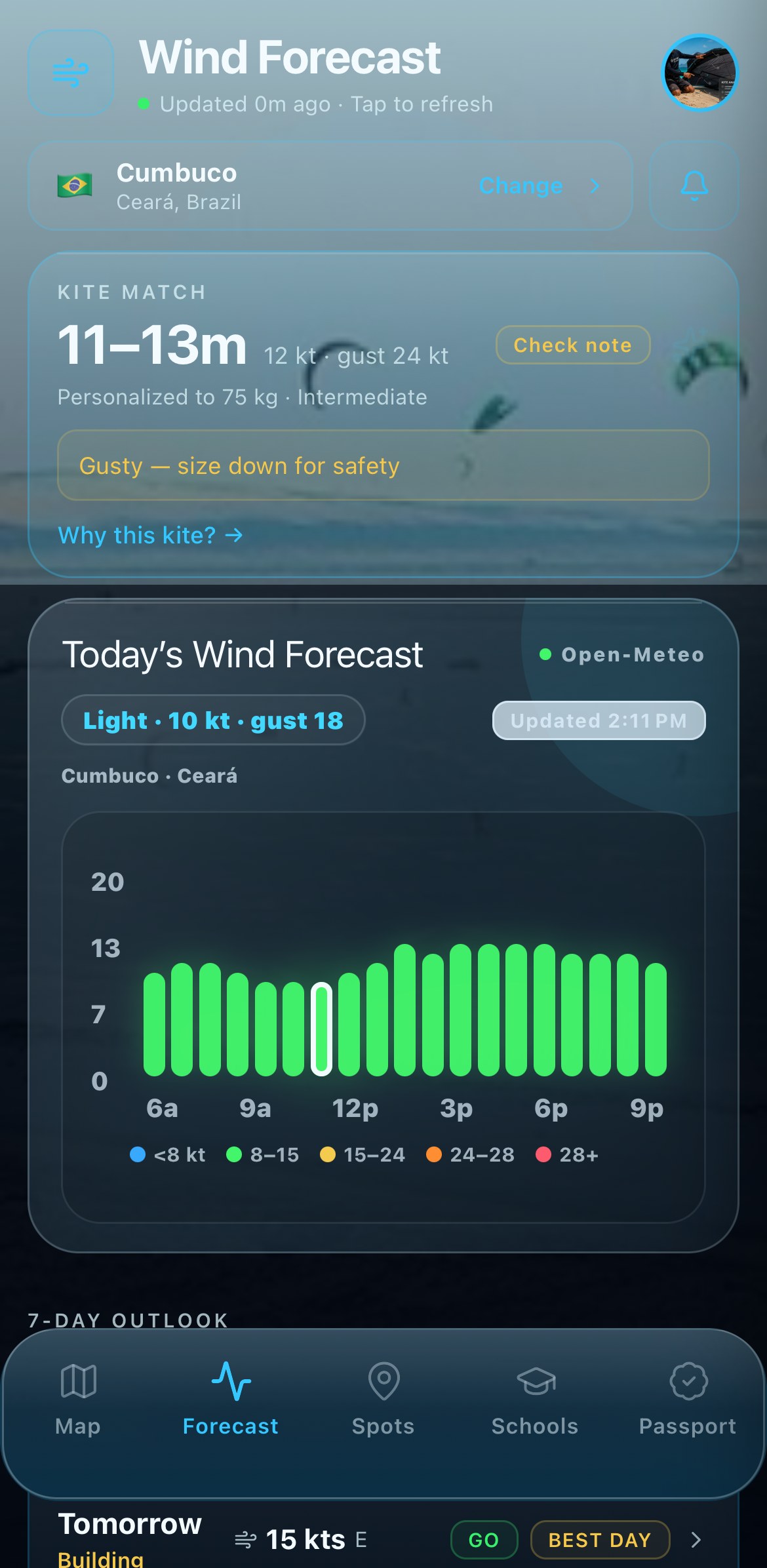
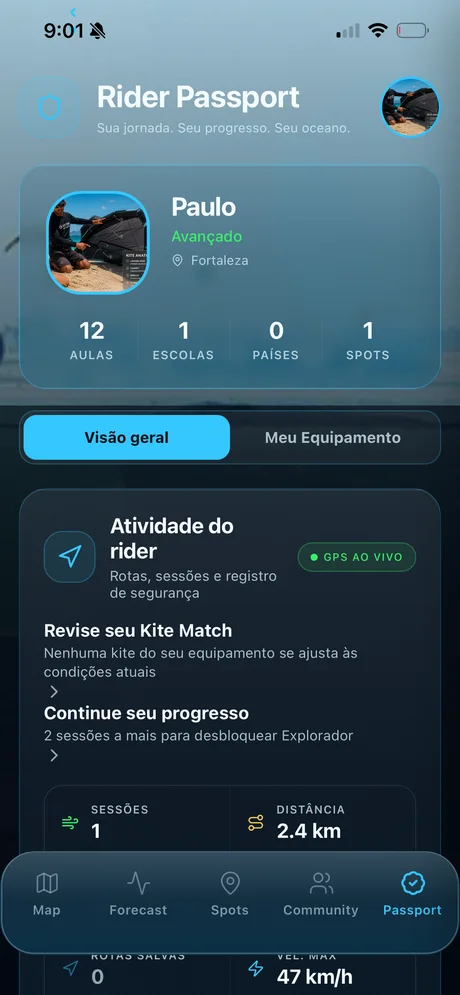
AYON Wind takes your weight, your skill level, your actual quiver, and today's current wind estimate at the spot you're standing on — and returns a size to rig right now. Not a generic chart: your kites, this spot, this afternoon. If the gust spread makes the call marginal, it says so.
A note on safety
Being overpowered is the single most common cause of kitesurfing injury. When in doubt, size down. No table, app, or forecast — including ours — replaces your own read of the water before you launch. See our Safety Disclaimer. Safety Disclaimer.
Frequently asked questions
What kite size for 20 knots?
For a 65–85 kg rider on a twin-tip, 20 knots typically calls for a 7–9 m kite. A lighter rider (under 65 kg) is usually on 5–7 m, a heavier rider (over 85 kg) on 9–12 m. Adjust down for gusty conditions or a large board.
What kite size for 15 knots?
A 65–85 kg rider on a twin-tip is usually on 9–12 m in 15 knots. Under 65 kg, 7–9 m. Over 85 kg, 12–14 m. Fifteen knots is marginal for many riders — a larger board helps more than a larger kite.
Is it better to have a kite too big or too small?
Too small. Being overpowered is the most common cause of kitesurfing injury; being underpowered is mostly just frustrating. If the call is marginal, size down.
How does rider weight affect kite size?
Heavier riders need more power to get going and to stay upwind, so they size up. As a rough rule, every 10–15 kg of rider weight shifts you roughly one kite size in the same wind.
Does board size change what kite I need?
Yes, significantly. A bigger twin-tip generates more power at the same kite size and can rescue an underpowered day. A small board or a directional/surfboard usually needs a size up. Foiling needs dramatically less kite.
Take AYON Wind with you.
Current wind, gusts, and direction for every spot in this guide — plus route intelligence for the downwinders. Built by riders who call this coast home.