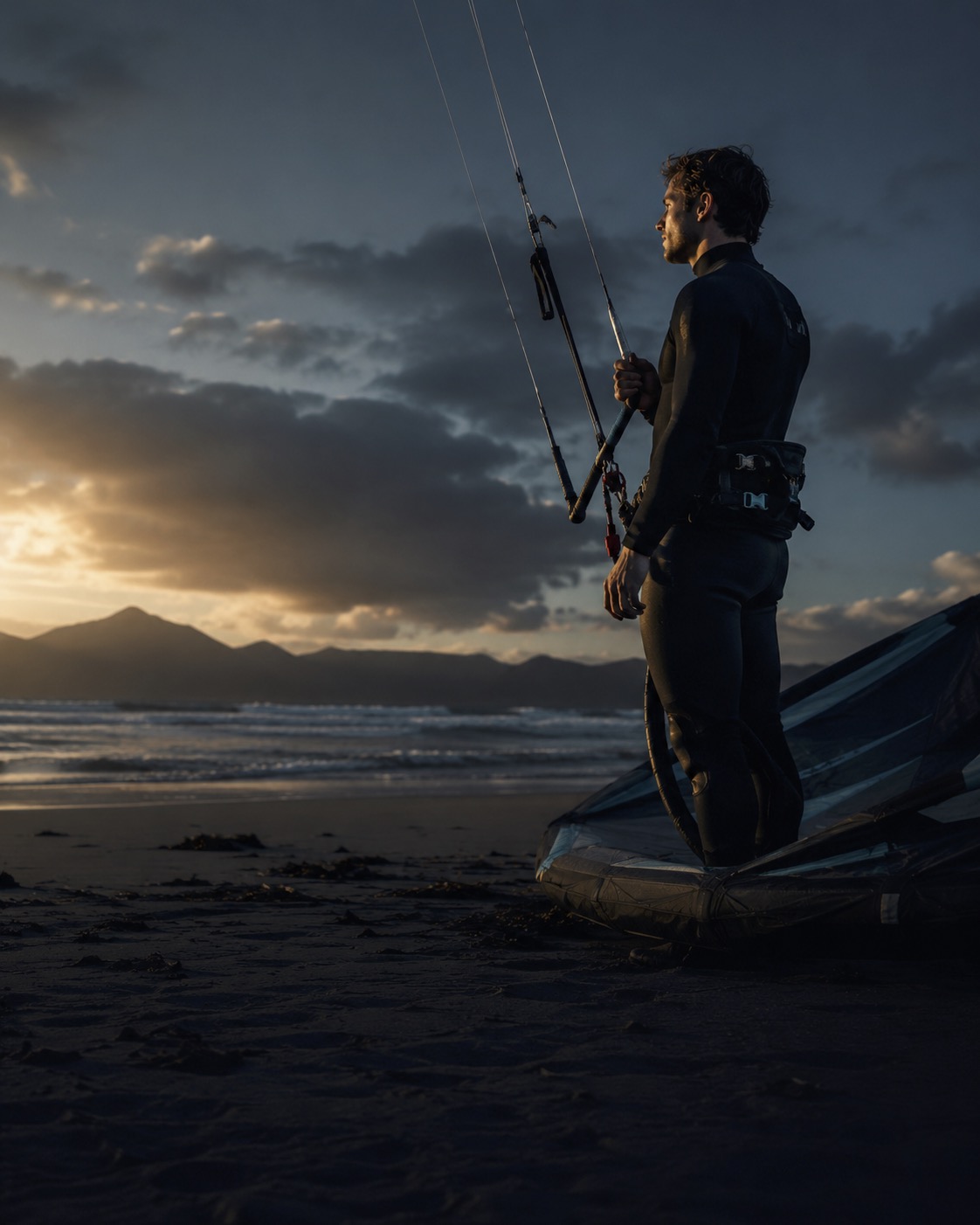
Kitesurfing Taíba.
An hour or so beyond Cumbuco, Taíba is the quieter sibling — a fishing village with a flat-water lagoon on one side, a proper wave spot on the other, and far fewer kites in the sky. It's also the landing beach of the coast's classic first downwinder.
Taíba, right now
Current conditions from the same signal the AYON Wind app reads.
How the wind works
The same E/ESE trades that power Cumbuco arrive here a touch cleaner, with less traffic to share them with. The lagoon takes the wind side-shore over flat water; the sea delivers side-onshore riding with waves that pick up when the swell cooperates.
Best season
The same window as the rest of the coast: roughly August through December, peaking September to November.
Conditions by level
The Taíba lagoon is a genuine learning gem — flat, warm, and much less crowded than Cauípe. Local schools teach here through the season.
Split your days: lagoon in the morning for progression, sea in the afternoon for real-world conditions. Arriving by downwinder from Cumbuco is the rite of passage.
The wave spot in front of the village is one of this stretch's best kept secrets on a good swell — and the next downwind leg to Paracuru starts at your feet.
Watch out for
- The shore break in front of the village gets heavy at high tide — time beach landings for low to mid tide.
- On a south swell the landing zone narrows; when in doubt, ask a local rider before committing.
- The lagoon's depth shifts with rain and season — check before teaching or unhooking.
- Rocks near the point at the wave spot; scout at low tide before your first wave session.
Getting there
About 75 km from Fortaleza by road — an easy transfer. Better still, ride here: the Cumbuco → Taíba downwinder is the classic way to arrive.
Frequently asked questions
Is Taíba better than Cumbuco for kitesurfing?
Different, not better. Taíba is quieter with far fewer kites, has a flat-water lagoon on one side and a proper wave spot on the other. Cumbuco has more infrastructure and more schools. Many riders split their trip between both.
How do I get to Taíba?
About 75 km from Fortaleza by road — an easy transfer. The classic alternative is to ride there: the Cumbuco → Taíba downwinder is the traditional way to arrive.
Does Taíba have waves?
Yes. The wave spot in front of the village works on a good swell and is one of this stretch of coast's better-kept secrets. The lagoon on the other side stays flat regardless.
Is the Taíba lagoon good for learning?
Yes — flat, warm, and much less crowded than Cauípe at Cumbuco. Local schools teach there through the season. Note the lagoon's depth shifts with rain and season.
What kite size for Taíba?
The same trades that power Cumbuco arrive slightly cleaner at Taíba. A 10–12 m covers most of the season comfortably; riders who prefer the lagoon often go a size bigger (12–14 m) on days when the sea is blowing harder than the flat water inside.
Take AYON Wind with you.
Current wind, gusts, and direction for every spot in this guide — plus route intelligence for the downwinders. Built by riders who call this coast home.
Downwind route records through here
Measured corridors from the AYON Coastal Intelligence research dataset — distance measured on the drawn geometry, with the hazards and evidence class on record.